
Deep Sea Minerals Corp. is a subsea mineral exploration and development company focused on evaluating opportunities to support the future supply of critical minerals through the acquisition, exploration, and development of deep-sea mineral assets. The Company’s strategy is centered on identifying jurisdictions and geological settings with potential exposure to polymetallic nodule systems, which are recognized for containing combinations of metals that may be relevant to defense, industrial manufacturing, clean energy infrastructure, advanced electronics, and artificial intelligence-related supply chains. These seabed resources represent a largely undeveloped component of the global mineral supply base and are the subject of increasing policy, scientific, and regulatory attention worldwide. As part of this process, the Company has commenced early-stage engagement with selected governments and regulatory bodies in the Pacific Ocean region to assess potential pathways for future exploration initiatives, subject to applicable international, national, and environmental frameworks.

INTERVIEW TRANSCRIPTS:
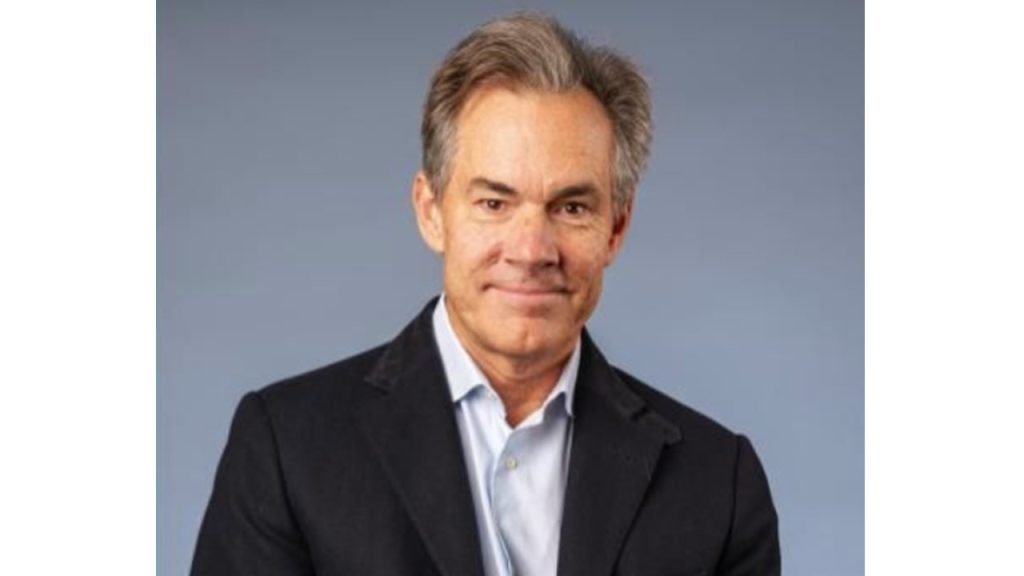
WSA: Good day from Wall Street, this is Juan Costello, Senior Analyst with The Wall Street Analyzer. Joining us today is James Deckelman, CEO at Deep Sea Minerals Corporation. The company trades on the CSE, the ticker symbol is SEAS, and on the OTCQB, DSEAF. Thanks for joining us today, James.
James Deckelman: Juan, thank you so much.
WSA: Yeah, for sure. So please start off there, providing a history and overview of the company as well as the management team.
James Deckelman: Thank you very much for the opportunity to be on your show, and a great place to start. Deep Sea Minerals Corp. is a Canadian subsea minerals exploration and development company focused on the supply of critical minerals to the United States.
We are publicly traded, and listed on the Canadian Securities Exchange under the ticker SEAS. We also trade on Frankfurt Exchange, and over the counter in the U.S. We have a U.S. subsidiary called American Ocean Minerals Corp., headquartered in Texas. We are a company that has been in existence since 2022. While we were founded in 2022, what is germane to this conversation is the repurposing, the rebranding of the Company that took place in January

Just last month, we re-focused on the rapidly expanding critical minerals sector. Critical minerals such as manganese, copper, cobalt, nickel, and rare earths are extremely essential for a number of things: defense systems, grid infrastructure, electronics, and AI supply chains. They are the building blocks of modern day power. Without them, there is no modern defense system, there is no tech dominance, there is no clean energy transition. As such, we see this as a market with significant potential and one that we would like to position in.
The suite of minerals that I described is abundant in marine environments, that is, in offshore, deep water environments, in the form of what we call polymetallic nodules. These nodules concentrate all critical minerals, the full suite, into a single ore body, about the size of a softball, that rests unattached to the sea floor. We’re focusing on harvesting this type of mineral in a marine environment, which is unlike terrestrial mining in that it requires, for example, no cutting, no blasting, no tunneling, no removal of overburden, no tailings, and no water and other waste streams.

WSA: Oh, yeah, that’s great. And so can you talk about the company’s main projects and what kind of progress you’ve seen there, as well as what you have planned there for the next few months?
James Deckelman: Yes, of course. Deep Sea is in the license application process. We are engaged in exploration planning as well. We have prioritized areas of pursuit based on four principal criteria. Number one, a well-defined, significant resource base. Number two, regulatory certainty and a very clear regulatory path to commercialization. Also areas that have proven harvesting technology. And lastly, access to the world’s highest value markets.
As a result, the Pacific Ocean is our principal area of geographic focus. Three principal areas. One is the CCZ. The other is the Cook Islands. The third, American Samoa. Let’s start with the CCZ.
CCZ is an acronym for the Clarion-Clipperton Zone. It is an area that lies between Hawaii and the Baja Peninsula in Mexico, about 1,100 nautical miles from San Diego, about a four-day sail. And it is the most proximal resource of this type to the United States, which has the highest value market. It’s now accessible for U.S. entities through a U.S. regulator called NOAA, which provides for both exploration licenses and commercial recovery permits.

The other is the Cook Islands. It’s a sovereign, autonomous, politically stable island country in the South Pacific, north of New Zealand. Very well endowed with critical minerals, particularly cobalt. It has an outstanding stable political history, and a strong seabed mineral strategic tie with the United States that was formalized just a few weeks ago.

Third is American Samoa. It is a U.S. Pacific territory with a very important naval base, which has one of the deepest harbors in the world. The U.S. has mineral rights outside of American Samoa’s three-mile territorial limit. A U.S.-funded hydrographic survey commenced just earlier this month, ahead of a likely future lease sale to be held by BOEM, the U.S. Bureau of Ocean Energy Management.
These three areas are the principal areas of focus for us right now. We have made significant progress on several fronts. Operationally, we have exploration license applications in progress in both the CCZ as well as the Cook Islands, and we’re evaluating opportunities in American Samoa. Organizationally, we’re building out the leadership team and advisory board, also building additional operational and technical capability. Technical partnerships and technology partnerships are also extremely important to us, across the value chain. We’re in discussions now with several service providers in this respect. We are also emplacing strategic partnerships; forging partnerships with multinational governmental organizations in the CCZ, for example.

We are now a member of the U.S. Defense Industry Base Consortium. And very important to the investor community on the capitalization front is that we had a highly successful private placement, which was much oversubscribed. We saw that as a very clear validation of the sector, of our company, and of our strategy.
Looking forward, let’s start with the first six-month timeline. We will be securing one or more exploration licenses and we’ll have exploration and operational technology partnerships in place. In the next 12 months: we’ll be commencing operations on one or more exploration licenses where we will have had the first work program completed, with the goal of having an independent third-party certification of the asset’s volume and grade, at least in the inferred minerals category. And we also hope to have a relationship in place with EXIM Bank, which is a non-dilutive potential source of financing to fund operations.
Following that, looking further afield Juan, a possible up-list to the NASDAQ exchange, second cruises in our licenses to further delineate resource volume and to design test production operations, and possibly additional highly-focused portfolio build.
WSA: Great. And so, yeah, James, what are the key trends and opportunities that you’re seeing right now in the sector, and what makes Deep Sea Minerals positioned to capitalize?
James Deckelman: It is a pivotal moment in the sector right now. It is an early stage industry, but there are three drivers that are operative at present. The first is defense. The second is electrification. And the third is the inability of traditional terrestrial mining supplies to meet rapidly growing demand. In short, the U.S. is in a state of supply chain vulnerability and in stark need of significantly more supply chain resilience. So let’s cover these one at a time. Defense first.
Many actions that have been taken by the U.S. government in the last year, beginning with the April, 2025 Trump administration executive order declaring critical minerals as a matter of national security. This is very important to military preparedness, as you can imagine. There is a stark realization that these minerals are essential to national defense, and that currently they’re concentrated in the hands of China, an economic adversary.
So let’s talk about a couple of things. Cobalt, in particular, which is used in jet engines, missiles, other such applications.. The Chinese control essentially the entire cobalt supply chain, from resource to market. In fact, about 75% of the world’s cobalt is sourced from Chinese owned and operated mines in the Democratic Republic of the Congo. China has most of the world’s cobalt processing capability as well.
Cobalt is in the hands of some other jurisdictions as well. Indonesia, for example, a large producer, accounts for about 10 percent of the world’s cobalt production, but is frequently subject to export controls.
Another important mineral in defense is manganese. It is used in aircraft coatings, for example. As it relates to manganese, the U.S. has 100% import reliance.
Moving on to electrification. When we talk about electrification, it’s about copper. Copper is the metal of electrification. Copper, amongst other minerals, is used widely for grid infrastructure, batteries, EVs and technology. Copper demand driven by data centers in particular is now extremely high in the U.S. Amazon, for example just announced an agreement with Rio Tinto to reopen a dormant copper mine to serve its data centers in Arizona. China, coincidentally, is one of the world’s most influential producer in terms of copper ownership and financing as well.
It’s also important to note that copper from traditional resources, from the U.S., from Canada, and places like Chile, has been steady or declining in recent years. So, cobalt, like copper, has a supply chain that’s highly concentrated in the hands of the Chinese, which places the U.S. in a very vulnerable position.

The third dynamic we’re facing as an industry is terrestrial constraints; critical minerals coming from conventional terrestrial mines. Existing terrestrial mines simply can’t meet the rapidly increasing demand that we’re now seeing in the sector. Ore grades are declining, there is increased social and environmental opposition, and concentration in the hands of the Chinese and the DRC. And in places like Indonesia, where there are export controls and countries that are now sanctioned.
The question is then: can new mines bridge the gap? Possibly, but not likely. We saw a recent study in which it was concluded that some 293 new terrestrial mines would be required by 2030 to meet battery demand alone. That is in the next three and a half years.
So, highly unlikely. What also is happening, however, in the terrestrial sector is that they’re innovating technologically. Recycled mine waste, for example, could be an important contributor to the supply side, but it’s just not going to be enough.
For this reason, we’re positioning marine rather than terrestrial critical mineral deposits with a view to position across the value chain, from resource to market.

WSA: Yeah, certainly. And so before we conclude here, James, why do you believe investors should take a look at the company as a good investment opportunity at this point in time today? And what are the main drivers there?
James Deckelman: Very good question. And I think the answer is really quite simple. There are three things. One is the sector. The second thing is the moment. The third thing is the company.
Talking about the sector first. We’re experiencing tremendous demand surge right now. For example, IEA, a Paris-based autonomous intergovernmental organization, forecasts that the demand, hence value growth for critical minerals to double by 2040.
There are no viable alternative sources. Terrestrial mines simply can’t deliver the volumes that are required to meet demand. Commodity prices for many of these critical minerals have increased substantially. Copper, for example, was up 40% in 2025.
In addition, the U.S. government’s support for the sector, the regulatory momentum, is staggering. Starting with the Trump executive order in April 2025, declaring seabed minerals a national security priority, several things have happened in just the last four to five weeks alone. The U.S. Commerce Secretary, has been directed to negotiate access and process critical minerals with foreign suppliers using trade leverage if required. The license application process, through which U.S. regulators such as NOAA awards licenses and commercial recovery permits, has been streamlined.

There’s now provision for consolidated exploration license and commercial recovery permit application. As mentioned before, in American Samoa, the U.S. has just commenced a hydrographic survey, about a 30,000-square-mile hydrographic survey that will underpin a future lease sale.
Another development is called Project Vault, a $12 billion initiative, unprecedented in the sector, creating a U.S. strategic reserve of critical minerals.
And also other partnerships. The U.S. announced just in the last week or two a strategic collaboration with the Cook Islands. The Cook Islands is rich in critical minerals, and is a priority area for us.
And the second thing is the moment. The sector is emerging. It’s nascent. Juan, this is a sector that has been around, has been studied. for decades, in fact, since the 1960s.But it was always an industry of the future. It was studied by governments, it was studied by institutions. But now, all of a sudden, the future is today.
We’re witnessing a global energy system that is changing profoundly. One that had been traditionally fuel-based, to one that’s increasingly reliant on critical minerals. And a U.S. realization that both the U.S. economy and the U.S. defense ecosystem are being held hostage to offshore producers. We very much have a supply chain that is vulnerable.
U.S. tech dominance. The AI-driven demand is significant, both for the data centers, as well as the grid structure that serves them. So, in that respect, strong market drivers on both the supply side and the demand side as well. Strong commodity price drivers and unprecedented regulatory support from the U.S. government.
And then last is the company. We have a second-mover advantage in this space. We can lever the many decades of technological and engineering advancements that have been made by our predecessors, as well as the significant database that’s been amassed by this industry..
Most importantly, there’s only one other publicly traded alternative in this space. Through Deep Sea, the sector can be accessed at a fraction of the cost, with far greater upside, with far lower volatility, and with no debt to service. So, we are a highly attractive alternative to the one other player publicly traded in this space. I think this has already been recognized by both the capital markets and by the equity markets. As I mentioned, our initial private placement was significantly oversubscribed. And since we repurposed, rebranded, we’ve been trading up over 200%. So, I think tremendous validation and recognition by both the capital markets, as well as the equity markets.

WSA: Well, we certainly look forward to continuing to track the company’s growth and report on the upcoming progress. And we’d like to thank you for taking the time to join us today, James, and introduce our investor audience at Deep Sea Minerals Corp. It was great having you on.
James Deckelman: Juan, thanks so much. It’s a pleasure. We look forward to speaking again very soon.

Be the first to comment